

Key Takeaways
- Dry eyes happen when your tears aren’t keeping the surface of your eye comfortable. Symptoms usually show up in both eyes.
- When your tear film breaks down, the surface of your eyes becomes irritated and reacts more easily to allergens and dust.
- Screen time, wind, smoke, dry indoor air, pollen, and pet dander can all play a role in dry eye.
- Artificial tears, a humidifier, and regular screen breaks can help ease discomfort.
- Persistent symptoms, pain, and ongoing redness are worth a visit to an eye doctor in Knoxville.
The Itch You Can’t Stop Scratching
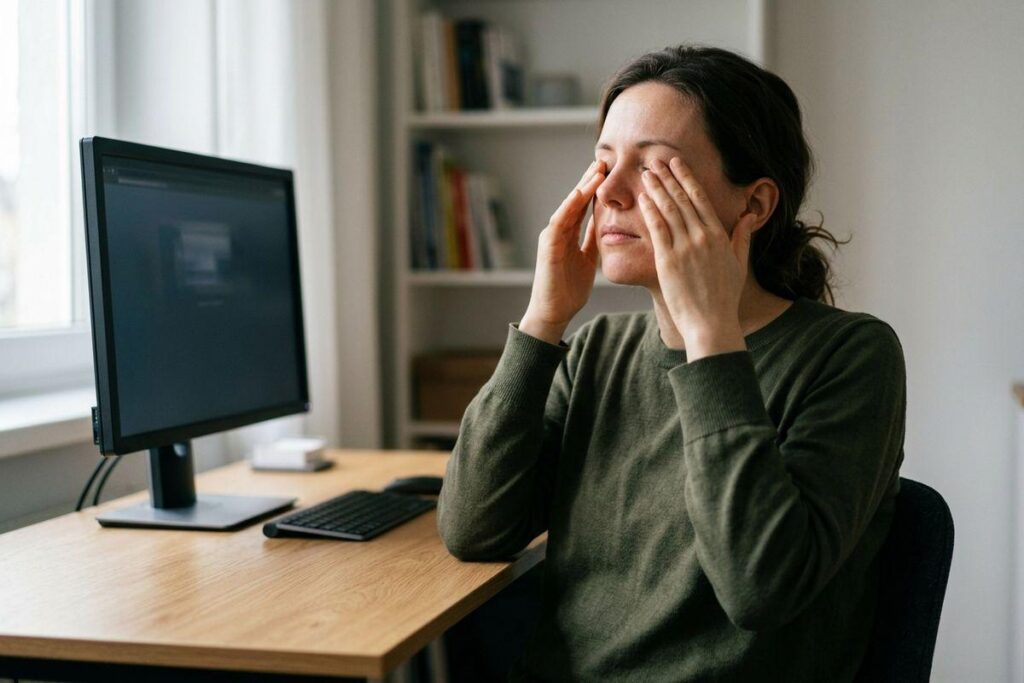
You blink, and it still feels like sand is stuck under your eyelid. So you rub your eyes. This feels good for a few seconds, then the itchiness comes right back, only worse. By mid afternoon your eyes are red, your screen looks a little fuzzy, and you’re wondering if it’s allergies, a cold coming on, or something else entirely.
Dry eyes and itchy eyes are often connected. When your tear film breaks down, the surface of your eye becomes irritated and reacts more strongly to irritants like dust and pollen.
If discomfort persists, dry eye therapy with our team at Karns Vision Center can often help address symptoms.
What Dry Eyes Feel Like
Dry eye happens when your tears don’t keep the surface of your eye lubricated. It usually happens in both eyes at once.
Symptoms often develop as the day progresses. Mornings might be fine, but by the time you’ve finished a long stretch of work, your eyes might feel tired and raw. Common symptoms of dry eye include:
- Stinging, burning, or a scratchy feeling
- Redness and sensitivity to light
- Blurry vision that comes and goes
- Watery eyes, which sounds backward but happens
- A gritty feeling like something is in your eye
Why Dry Eyes Turn Itchy
When the tear film breaks down, the surface of your eyes can dry out, making them more prone to irritation. As a result, your eyes may react more easily to allergens like pollen, pet hair, and dust.
However, while it’s tempting, you should never rub your eyes. Rubbing adds to irritation, which only makes the cycle worse in the end.
What Contributes to Dry & Itchy Eyes
Everyday Factors
Long stretches of screen time are a big contributor to dry eye. This is because you blink less when you’re focused on a monitor or phone, which in turn reduces the rate at which your eyes replenish moisture.
Wind, smoke, and dry indoor air can also contribute. Add pollen, dust, and pet dander to the mix, and your eyes can have a lot to deal with.
Other Factors
Age, hormonal changes, and contact lens wear can also play a part in dry eye, as can certain medicines, including antihistamines and decongestants. Some health conditions and low vitamin A have also been linked to the condition.
Blocked oil glands along your eyelids (also known as meibomian gland dysfunction) is another common cause.

How to Relieve Dry and Itchy Eyes at Home
Artificial tears are usually the first thing to try, since they add moisture to the surface of your eye. If the indoor spaces where you spend your time have dry air, a humidifier can make a noticeable difference.
It also helps to give your eyes regular breaks from screens. The 20-20-20 rule is an easy way to do this: every 20 minutes, look at something 20 feet away for at least 20 seconds. This gives your eyes time to relax and recover.
Small Habits That Help
- Point fans and air vents away from your face, especially in the car
- Wear wraparound sunglasses outdoors to block wind and dust
- Add foods with omega-3s and vitamin A to your meals
When to See an Eye Doctor in Knoxville
If your symptoms persist even though you’ve been using drops, that’s a sign that it’s time to have a professional take a closer look. The same goes for persistent redness or troubles with your contacts.
Sudden pain or vision changes call for emergency eye care.
What Happens at Your Appointment
At a dry eye consult, your optometrist will look for the underlying causes of your symptoms. Depending on what they find, management options might include prescription drops or in-office treatment such as OptiLight by Lumenis. We’ll also likely recommend that you schedule follow-up visits so that we can track how things are going.
Our team at Karns Vision Center is here to help you find relief. Book an appointment with an eye doctor in Knoxville and get your eyes feeling comfortable again.